Why Affinity Dental Clinics Chooses Invisalign: Our Commitment to Evidence-Based Orthodontic Care
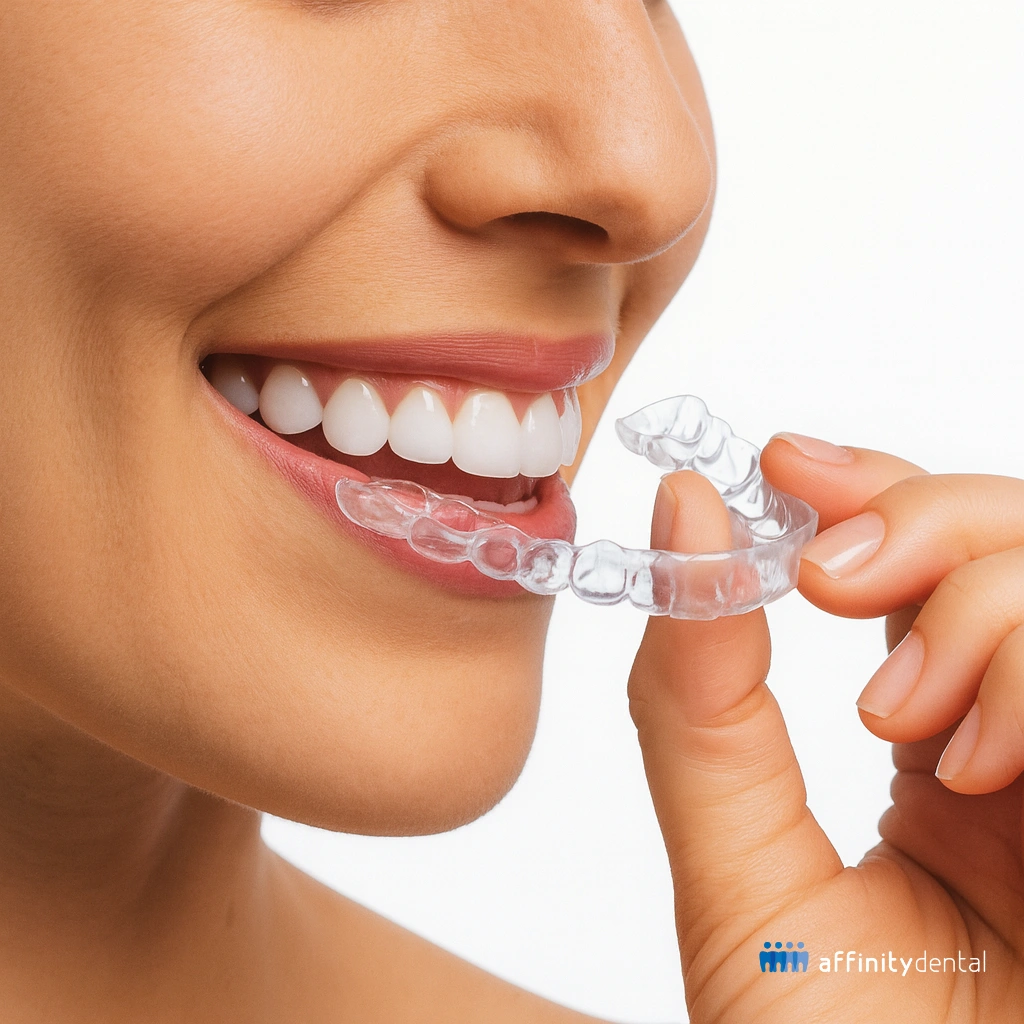
Over the past decade, clear aligners have transformed orthodontic treatment. What was once considered an alternative to braces has become one of the most popular ways to straighten teeth.
As demand has increased, so has the number of companies offering clear aligner systems. Today, patients can choose from dozens of international, regional, and locally manufactured brands, each promising straighter teeth, faster treatment, and lower costs.
With so many options available, one question naturally arises:
Are all clear aligner systems the same?
At Affinity Dental Clinics, our answer is simple: not necessarily.
Although many clear aligners may look alike, orthodontic treatment is far more than wearing transparent trays. Behind every successful case is a carefully planned treatment strategy, supported by digital technology, biomechanics, material science, clinical research, and the expertise of the treating dentist.
After carefully evaluating the available systems, our clinical team made a deliberate decision to offer Invisalign exclusively. This decision was not based on popularity or marketing. It reflects our commitment to recommending treatments that we believe offer our patients the highest level of confidence based on current evidence, technological maturity, and long-term clinical experience.
Our Responsibility as Healthcare Professionals
Healthcare is built on trust.
Every patient who sits in our dental chair places their confidence in our professional judgment. That trust carries an ethical responsibility. Our obligation is not simply to provide treatment—it is to recommend the treatment that we believe best serves the patient’s long-term health and interests.
As a reputable dental practice, we believe patients deserve recommendations that are guided by science, clinical evidence, and proven performance rather than by cost alone or the latest market trend.
When we recommend an implant system, a restorative material, or an orthodontic treatment, we evaluate questions such as:
- Is there sufficient clinical evidence supporting its effectiveness?
- Has the technology been validated through years of real-world use?
- Does it provide predictable treatment planning?
- Is it continuously refined through research and innovation?
- Can it consistently deliver the standard of care we expect for our patients?
This philosophy extends to clear aligner therapy.
Our decision to standardize on Invisalign reflects our commitment to evidence-based dentistry and our responsibility to recommend treatments that we believe provide the greatest level of predictability and clinical confidence.
Orthodontics Is More Than Straight Teeth
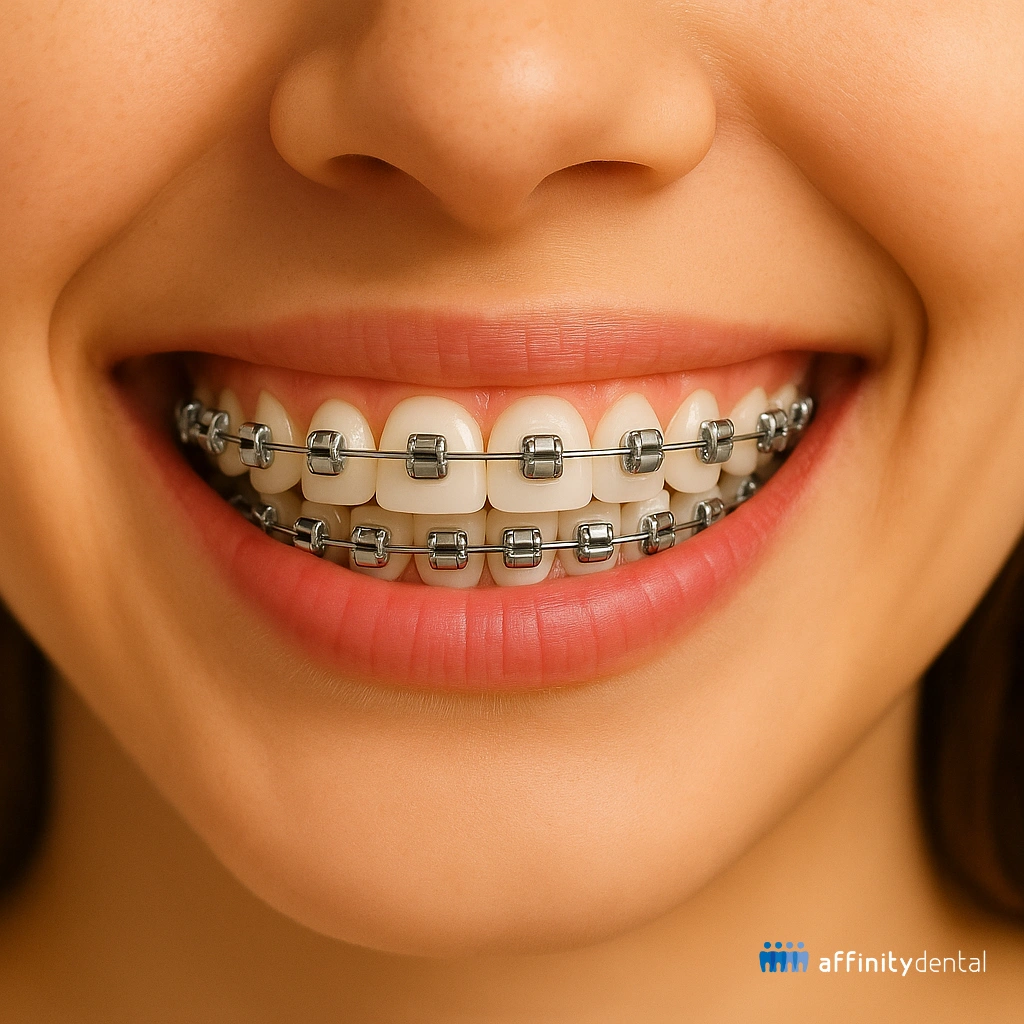
One of the biggest misconceptions about orthodontics is that it is purely cosmetic.
Straight teeth are certainly one of the goals, but orthodontic treatment also changes how the upper and lower teeth come together, how chewing forces are distributed, and how the bite functions over time.
Every planned tooth movement affects surrounding bone, supporting tissues, neighboring teeth, and the overall bite.
That is why orthodontic treatment should never be viewed as simply “wearing clear trays.”
Instead, it requires:
- Accurate diagnosis
- Comprehensive clinical examination
- Digital treatment planning
- Understanding of orthodontic biomechanics
- Regular monitoring
- Timely refinements when needed
The aligner itself is only one component of the overall treatment system.
Not All Clear Aligner Systems Are Built the Same
The growth of the clear aligner market accelerated after early foundational patents expired, allowing more manufacturers to develop their own systems. While this increased competition and patient choice, it also resulted in a much wider range of aligner technologies, treatment workflows, materials, manufacturing processes, and levels of supporting clinical evidence.
Appearance alone can be misleading.
Two clear aligners may look almost identical, yet differ substantially in:
- digital treatment-planning software,
- aligner material properties,
- force delivery,
- manufacturing precision,
- clinical validation,
- professional training,
- and long-term published evidence.
These differences are not always visible to patients, but they may influence treatment planning and execution.
Why We Chose Invisalign
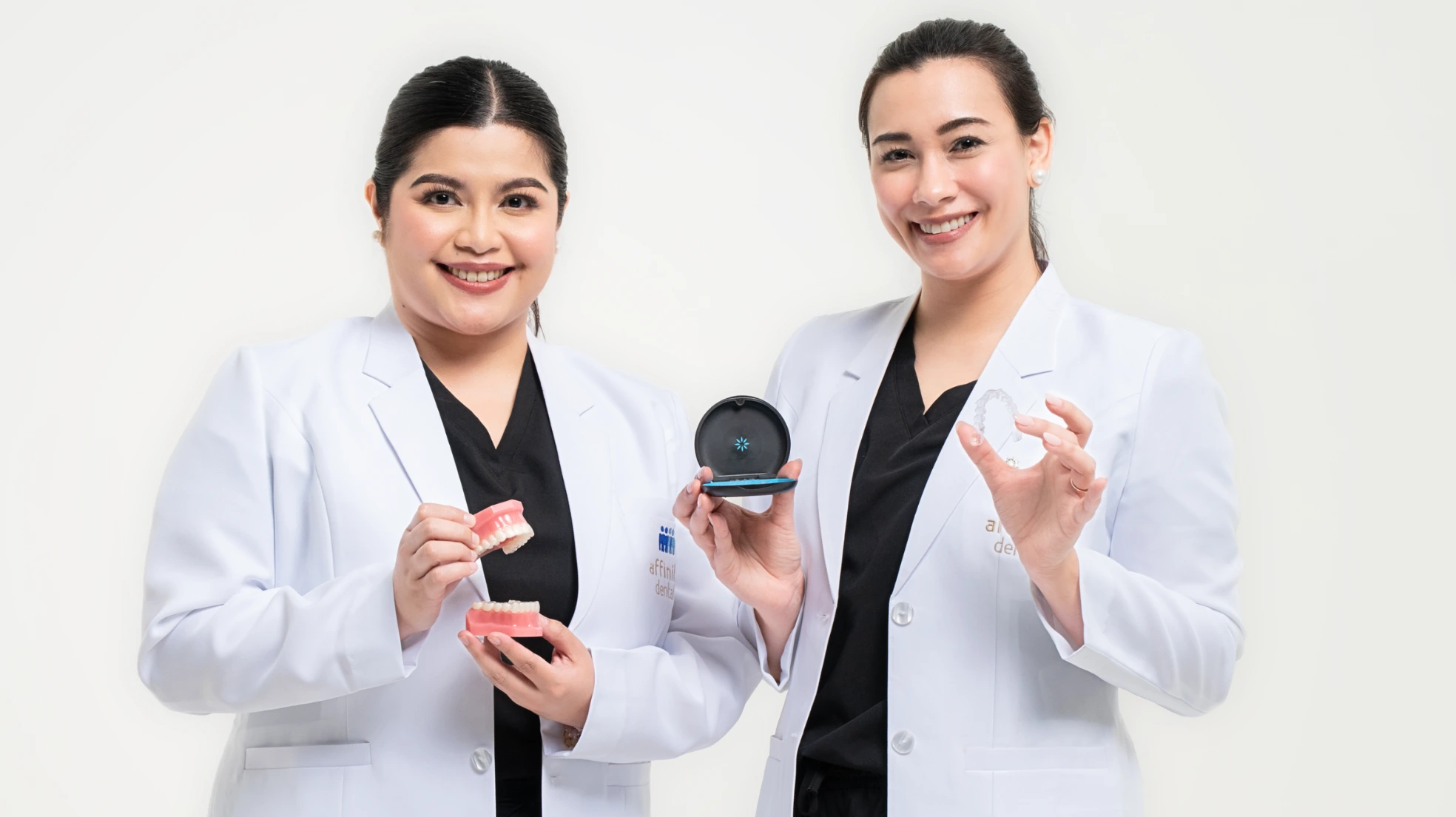
At Affinity Dental Clinics, we selected Invisalign because we believe it represents one of the most mature and extensively studied clear aligner systems currently available.
Since its introduction in the late 1990s, Invisalign has undergone more than two decades of continuous development. According to Align Technology, the Invisalign System has been used in more than 22 million patients worldwide and is supported by over 800 relevant peer-reviewed publications published over the past decade.
The Invisalign ecosystem includes:
- ClinCheck®, a three-dimensional digital treatment-planning platform that enables dentists to plan tooth movement before treatment begins.
- SmartTrack™, a proprietary aligner material designed for more controlled and consistent force delivery.
- SmartForce® features and optimized attachments that assist with specific tooth movements.
- Continuous software and biomechanical refinements developed over many years.
While no orthodontic system is perfect for every clinical situation, we believe these technologies provide an excellent foundation for carefully planned treatment.
Science Over Marketing
Marketing claims are common in modern dentistry. Clinical evidence is different.
Systematic reviews have found that Invisalign is an effective option for many mild-to-moderate malocclusions and can predictably achieve several common tooth movements. At the same time, the literature also recognizes limitations for certain complex movements and emphasizes the importance of appropriate case selection, treatment planning, attachments, refinements, and clinician expertise.
This balanced perspective is important.
Good dentistry is never about claiming that one product solves every problem. Instead, it is about understanding the strengths and limitations of each treatment option and choosing the right approach for each patient.
What Can Happen When Orthodontic Treatment Is Poorly Planned?
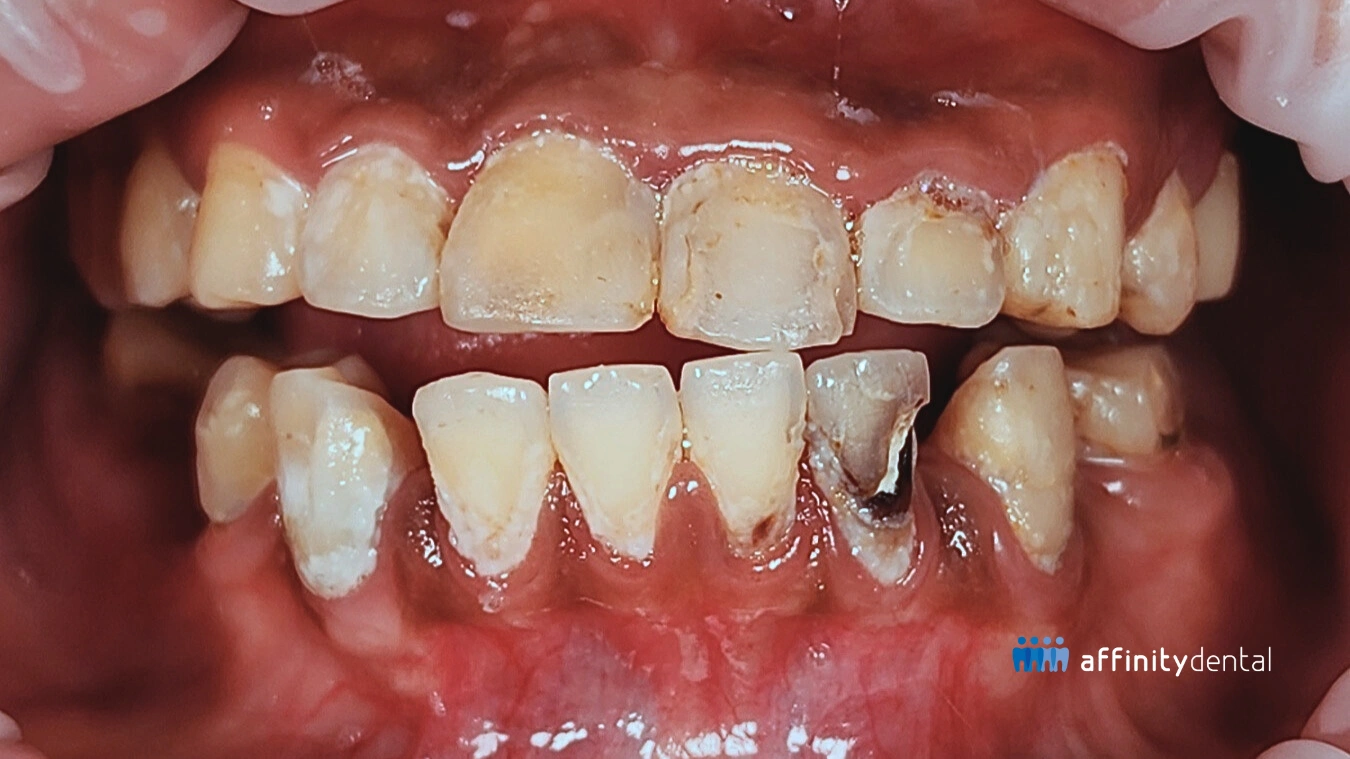
Orthodontic treatment changes living tissues. Like any healthcare procedure, it should be carefully planned and monitored.
Poor diagnosis, inappropriate treatment planning, inadequate monitoring, or selecting an unsuitable treatment approach may increase the likelihood of problems such as:
- Teeth that appear straighter but no longer fit together properly.
- Bite changes that affect chewing efficiency, comfort, or overall jaw function.
- Incomplete or stalled tooth movement requiring additional treatment.
- Relapse after treatment if tooth movement is not adequately controlled or retained.
- Root resorption (shortening of tooth roots), a recognized potential risk of orthodontic treatment that requires professional monitoring.
- Gum recession or periodontal complications in susceptible patients.
- Additional refinements, prolonged treatment time, or retreatment.
- Patients also frequently ask about jaw joint problems.
Current scientific evidence does not support the conclusion that orthodontic treatment, by itself, is a universal cause of temporomandibular disorders (TMD). However, patients with existing jaw symptoms or complex bite conditions require careful assessment, and any orthodontic treatment should be planned with the patient’s overall oral function in mind.
These realities highlight why choosing an experienced clinician and a well-supported treatment system matters.
The Cheapest Option Is Not Always the Best Value
We understand that cost is an important consideration.
It can be tempting to compare clear aligner systems based primarily on price, especially when the difference appears to be only a few thousand pesos.
However, orthodontic treatment should be viewed as a long-term investment rather than a short-term purchase.
If treatment is not completed as planned, requires multiple additional refinements, or ultimately needs retreatment, the overall financial and emotional cost may be significantly higher than the initial savings.
When you are changing your bite and smile for years to come, the better question is not, “Which aligner is the cheapest?” but rather, “Which treatment offers the greatest confidence that my case has been carefully planned and responsibly managed?”
Technology Does Not Replace Clinical Expertise
Perhaps the most important message is this:
No aligner system—regardless of brand—can replace the knowledge, judgment, and experience of the treating dentist.
Digital software assists with planning, but it does not independently diagnose periodontal disease, evaluate facial aesthetics, assess airway considerations, or determine whether clear aligners are even the most appropriate treatment.
Successful orthodontic care remains a partnership between advanced technology and skilled clinical decision-making.
That is why we invest not only in technology, but also in continuing education, careful case selection, and close monitoring throughout every patient’s treatment.
Our Commitment to Every Patient
At Affinity Dental Clinics, choosing Invisalign is not about following a global brand or dismissing other clear aligner systems. We recognize that several aligner systems can produce successful outcomes when used appropriately.
Rather, our decision reflects our professional judgment after considering the available clinical evidence, technological development, treatment-planning capabilities, and decades of accumulated experience behind the system.
Every recommendation we make is guided by one question:
“Would we confidently recommend this treatment to our own family?”
When the answer is yes, we recommend it to our patients.
That philosophy has guided our practice for years, and it continues to shape every clinical decision we make.
Because in the end, orthodontic treatment is not simply about clear plastic trays.
It is about moving teeth safely, preserving oral health, creating a stable bite, and delivering a smile that patients can enjoy with confidence for years to come.
Experience the Invisalign Difference at Affinity Dental Clinics
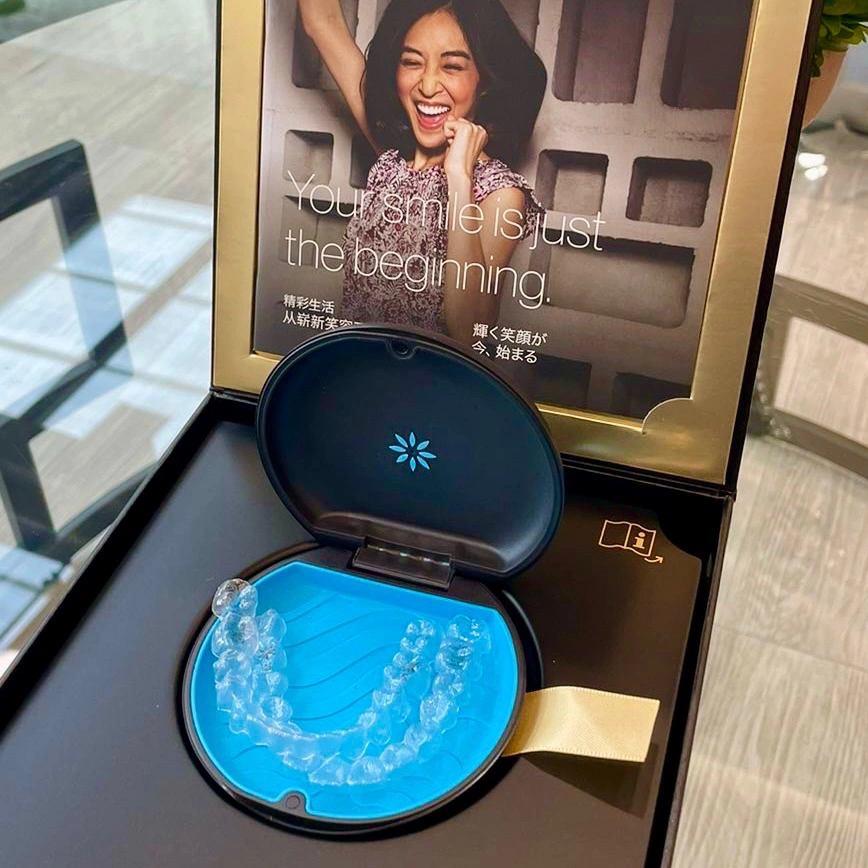
Choosing the right clear aligner treatment is about more than selecting a brand. It is about choosing a dental team that prioritizes evidence-based care, careful diagnosis, comprehensive treatment planning, and long-term oral health.
At Affinity Dental Clinics, every Invisalign treatment begins with a thorough clinical examination, digital smile assessment, and personalized treatment planning. We take the time to understand your bite, facial profile, oral health, and treatment goals before recommending the most appropriate course of care.
Whether your concern is crowded teeth, gaps, bite problems, or simply achieving a more confident smile, our Invisalign-trained dentists are committed to guiding you throughout every stage of your orthodontic journey.
We chose Invisalign because we believe it reflects the standard of care we want to provide—one supported by decades of clinical innovation, advanced digital technology, and extensive scientific research.
If you are considering clear aligners, we invite you to experience the difference that careful planning, proven technology, and experienced clinical care can make.
Schedule your Invisalign consultation at Affinity Dental Clinics today.
Our dentists will evaluate your smile, discuss your treatment options, answer your questions, and determine whether Invisalign is the right solution for you.
Because when it comes to your smile, every decision matters—and choosing the right orthodontic treatment is one of the most important investments you can make in your long-term oral health.
References
- Align Technology. The Science Behind the Invisalign® Smile – Clinical Evidence. Reports more than 22 million patients treated worldwide and more than 800 relevant peer-reviewed publications supporting the Invisalign System.
- Papadimitriou A, et al. Clinical Effectiveness of Invisalign® Orthodontic Treatment: A Systematic Review. Progress in Orthodontics. 2018. Concludes Invisalign is an effective option for many mild-to-moderate malocclusions while emphasizing appropriate case selection and acknowledging limitations for some complex movements.
- Lanteri V, et al. An Evaluation of the Invisalign® Aligner Technique and Consideration of the Force System: A Systematic Review. Highlights the importance of proper ClinCheck® planning, biomechanics, and clinician management, while noting improvements associated with SmartTrack™ and SmartForce® technologies.