






At Affinity Dental Clinics, we understand that jaw discomfort, headaches, clicking sounds, and bite imbalances can affect your quality of life far beyond your smile. That’s why we offer expertly designed TMJ Splints—custom-made devices that help manage temporomandibular joint (TMJ) disorders, reduce pain, and protect your teeth from long-term damage.
In this article, we’ll walk you through everything you need to know about TMJ splints—from what they are and how they work, to who needs them and what makes Affinity Dental Clinics a trusted name in TMJ Splint therapy in the Philippines.
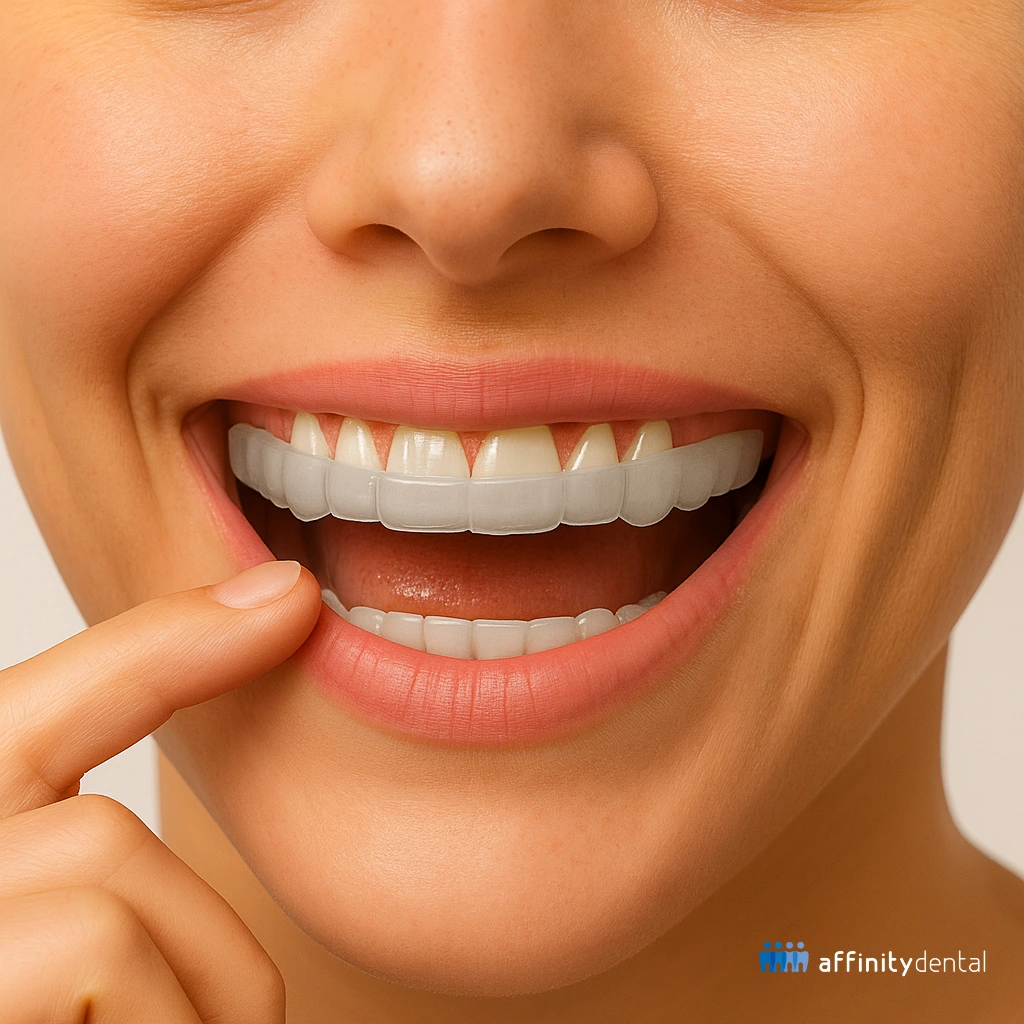
A TMJ splint, sometimes called an occlusal splint or stabilization splint, is a custom-made oral appliance worn over the teeth to:
These appliances can:
TMJ splints are typically worn during sleep, but some cases require daytime use, depending on the severity of the condition and the specific diagnosis. They are made of durable, biocompatible materials and are shaped precisely to fit your bite and jaw mechanics.
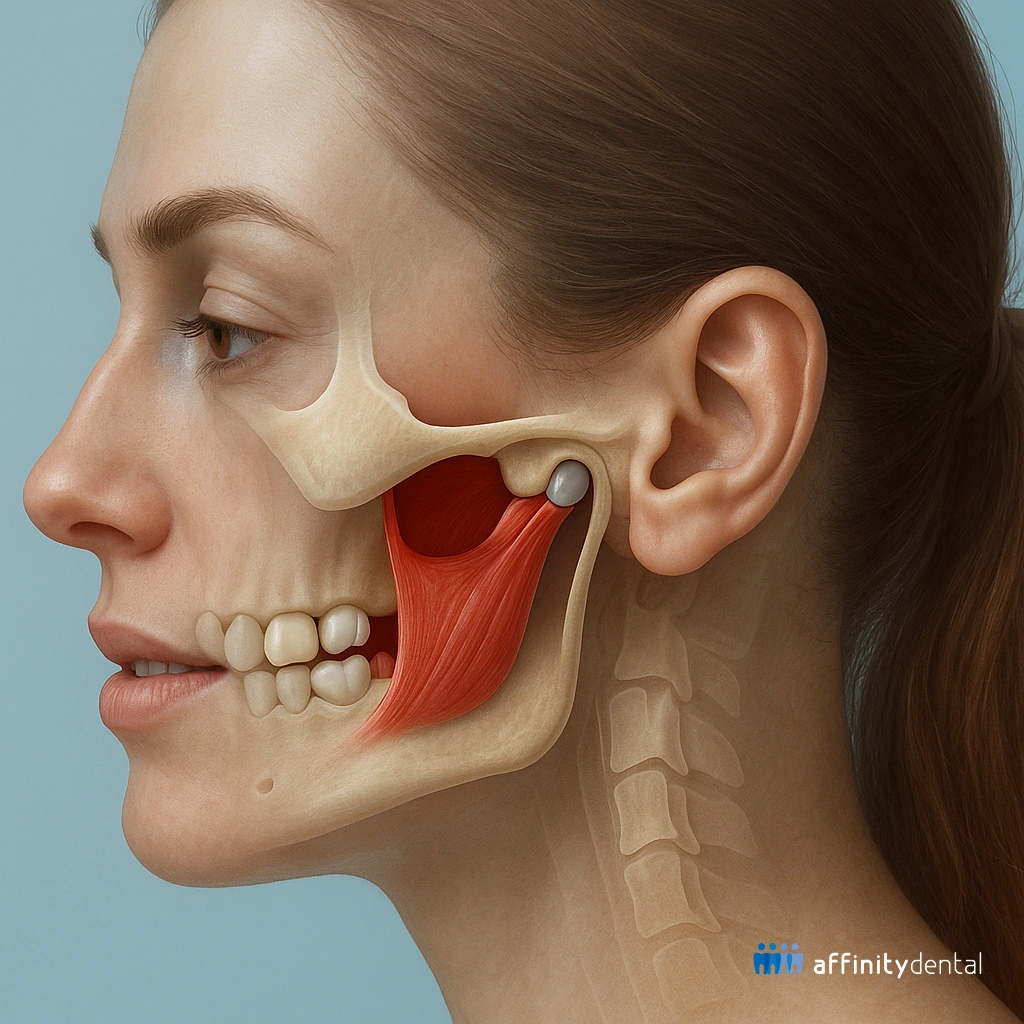
The temporomandibular joints are the small, complex joints that connect your jawbone to your skull. You have one on each side of your head, and they allow you to speak, chew, and yawn. When these joints become inflamed or misaligned, a condition known as TMJ disorder (TMD) can develop.
Symptoms of TMJ Disorders include:
TMJ problems can be caused by a range of issues, including:
A TMJ splint is not a cure for all jaw-related problems, but it’s often the first line of treatment for managing TMJ dysfunction. It works by:
By wearing the splint consistently, patients often notice a gradual reduction in pain, improved jaw function, and fewer headaches. In some cases, a TMJ splint is a stepping stone before more complex interventions like orthodontics or surgery.
At Affinity Dental Clinics, we customize each splint based on your individual diagnosis and goals. Common types include:
Worn mostly at night, this rigid splint covers the upper or lower teeth and helps reduce muscle hyperactivity and jaw compression. Commonly prescribed for bruxism and general TMJ discomfort.
Relieves the back teeth from contact and is useful when jaw muscles are in spasm due to clenching. Helps relax the jaw and reset muscular patterns.
Worn temporarily to train the jaw to rest in a more favorable position. Often used for moderate to severe TMJ dysfunction.
Combines a hard outer layer with a soft inner layer, providing both comfort and durability. Ideal for heavy grinders who need strong yet comfortable protection.
You may be a candidate for TMJ splint therapy if you experience:
Even if you don’t have pain, your dentist might recommend a splint as a preventive measure, especially if early signs of bite problems or grinding are present.
Before prescribing a TMJ splint, our dentists conduct a thorough clinical and radiographic evaluation. This typically includes:
This diagnostic phase is critical for identifying the true cause of symptoms. Not all jaw pain is due to TMJ disorders—some may stem from dental infections, sinus issues, nerve disorders, or even psychological stress.
Our TMJ assessment helps determine whether a splint alone is enough, or if a multi-specialty approach is required (orthodontics, physical therapy, stress management, etc.).
Once a TMJ splint is prescribed, the process typically involves:
We take a detailed mold or digital scan of your teeth to capture accurate measurements.
Your splint is custom-crafted by our in-house dental laboratory or a specialized lab for precision.
During your first fitting, we check for comfort, retention, and proper bite alignment (occlusion).
As your jaw relaxes and repositions, minor adjustments are made. These follow-ups are essential to long-term treatment success.
Most patients begin wearing their TMJ splint every night for several weeks to months. The total duration depends on:
Many patients experience noticeable relief in as little as 2 to 4 weeks, but long-term wear may be recommended for lasting protection and healing.
One of the fastest ways to reduce jaw tension and eliminate headaches.
Helps reduce night-time grinding, snoring, and jaw locking.
Prevents excessive wear, chipping, and cracking caused by bruxism.
A conservative approach before considering more invasive treatments.
Helps restore natural range of motion and jaw symmetry.
Often combined with orthodontics or myofunctional therapy for long-term success.
A common misconception is that a TMJ splint is just a night guard. While both are worn at night and may look similar, their purpose is different:
At Affinity Dental Clinics, we ensure you receive the right type of appliance based on clinical need—not just symptoms.
If you experience jaw pain, frequent headaches, clicking sounds when opening your mouth, or signs of grinding, you may benefit from a TMJ evaluation and possibly a splint.
Not exactly. A TMJ splint is designed to correct joint alignment and muscle tension, while a night guard mainly protects against grinding damage.
TMJ splints can relieve symptoms and support healing, but long-term outcomes depend on the underlying cause. Some cases may need additional treatment such as orthodontics or myofunctional therapy.
Most patients adjust within a few nights. The splints are custom-made for comfort and precision.
Typically, TMJ splints are worn during sleep only. Your dentist will advise if daytime use is needed.
The cost varies depending on the type of splint and complexity of the case. Affinity Dental Clinics provides transparent, ethical pricing after your consultation.
Living with jaw pain, tension headaches, or night-time clenching shouldn’t be your norm. With the right diagnosis and care, TMJ symptoms can be managed—and your smile, restored.
Book your TMJ consultation at Affinity Dental Clinics today and take the first step toward a pain-free, confident you. Our dentists will assess your case and explain whether a TMJ splint is the right solution for your needs.
Please wait for the confirmation message before going back or closing your browser.
Content Place Here without Image
Content Continuation
Content Place Here without Image
Content Continuation
Content Description
Content Description Numbered
Intro Paragraph
Additional (Optional)
Intro Paragraph
2nd Pragraph Optional
Closing paragraph
Intro Paragraph
Text Description
Outro Paragraph (Optional)
Intro Paragraph
Text Description
Outro Paragraph (Optional)
Intro (copy this if there are more paragraphs)
Text Description
| Column Heading | Column Heading | Column Heading | Column Heading | Column Heading |
|---|---|---|---|---|
| Row Data | Row Data | Row Data | Row Data | Row Data |
| Column Heading | Column Heading | Column Heading | Column Heading | Column Heading |
|---|---|---|---|---|
| Row Data | Row Data | Row Data | Row Data | Row Data |
Answer
Answer
Answer